


Nutrients in Food
We need food to survive and live healthy lives.
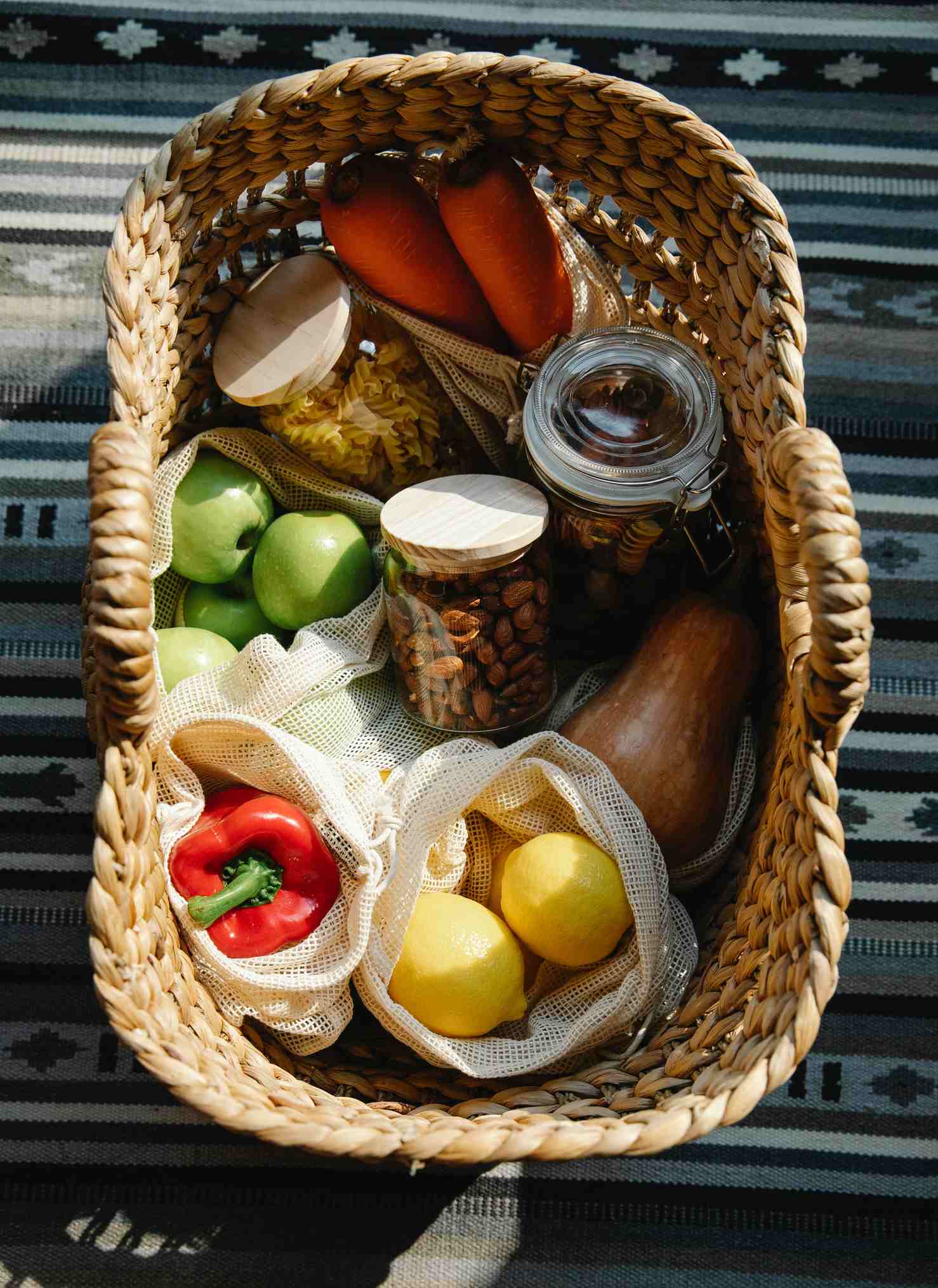
Food is made up of essential macronutrients which we need to provide us with energy and play specific roles in bodily functions.
These are:
- Protein: found in animal products, soy and legumes. Protein is needed for tissue development and maintenance.
- Carbohydrates: provided by starchy vegetables, legumes, fruit and wholegrains. It is the body’s preferred fuel source and gives us the energy for everyday activities.
- Fat: found in animal products, oils, nuts, seeds and avocados. Even though fat is often vilified, it is in essential nutrient for life and plays important roles in cell membranes, nutrient absorption and organ protection.
We also get a variety of essential micronutrients from food. These vitamins and minerals are required for all sorts of specific functions including bone maintenance, neurological functioning, immunity and energy production.
The best sources of vitamins and minerals are fruit, vegetables, wholegrains, dairy and lean proteins.
Food and Health
Just as eating a diet rich in a variety of healthy foods can be the source of good health, eating a diet rich in unhealthy foods can be the source of disease.
Although ‘unhealthy foods’ such as baked goods, processed meats and sugary drinks are completely fine to eat as part of a well balanced diet – these should not be eaten all the time.
Diets that include mostly these cause ‘lifestyle diseases’ such as obesity, type 2 diabetes and cardiovascular disease – of which we have high rates of in the western world.
In order to obtain the right quantities of all the macronutrients and micronutrients mentioned above which are essential for good heath and avoid disease – just eat a well balanced diet which contains lots of whole foods (fruits, veges, grains), lean protein and limits calorie dense and less nutritious foods.
All articles about Food and Nutrients
Scientists Found This in Diverticular Disease Patients
If you’ve been through a diverticulitis flare (maybe more than once), you know the routine. Severe pain, antibiotics or a hospital stay, a liquid diet, then a slow climb back to normal.
And then it’s supposed to be over.
Except for a lot of people, it isn’t quite over. The dull ache that comes and goes. The bloating that never fully settles. Bowel habits that stay unpredictable long after the flare has technically resolved.
A study published this year in Scientific Reports looked at the gut bacteria of people stuck in exactly that in-between zone — and the results may finally explain why.
Below is a video we made; there is also a written version underneath.
[Discover More…]5 Signs Your IBS Isn’t About Food
If even your “safe foods” are starting to feel like a trigger, food probably isn’t the real problem.
For a lot of people with IBS, the gut is reacting to something that has nothing to do with what’s actually on the plate. Diet can matter a lot for some people. But for others, months or years of cutting, tracking, and restricting never gets them anywhere close to relief, simply because food was never the main driver in the first place.
This is the pattern behind questions like: “Why is the same lunch fine on Tuesday and a disaster on Thursday?” Or, “I’ve cut almost everything, so why am I still not better?” Or, “Why do my symptoms start before I’ve even eaten?”
In this article, I’ll walk through five signs that point toward a different driver behind your IBS, and what that means for how you actually manage it going forward.
Below is a video we made; there is also a written version underneath.
[Discover More…]Prevent Diverticulitis Recurrence: 5 Things To Fix Before Your Next Flare
As a gut health dietitian service, we see a lot of diverticulitis cases — and honestly, the pattern we see most often is this: someone has a flare, they recover, they change nothing, and a few months later they’re back in the ER. Not because they did anything wrong, but because nobody told them what to actually fix.
I was on a call with a client last month who’d just come out of hospital with her second diverticulitis flare in two years. She said, “Joe, they gave me antibiotics, a leaflet about soft foods, and sent me home. Same as last time. Nobody told me why it keeps happening.” That’s a conversation I have constantly, and it’s exactly why I put this together.
Here are the 5 things you should be doing after a flare, and why most people never get told about them.
Below is a video we made; there is also a written version underneath.
[Discover More…]Top 5 IBS Red Flags Patients Ignore
I want to preface this by saying a majority of people with IBS aren’t ignoring warning signs because they’re careless. They’re ignoring them because they’ve been told everything is fine. Normal colonoscopy. Normal bloods. Here’s a food list. Off you go.
And then years pass, and they’re still planning their days around the nearest bathroom.
Below, I walk through five red flags that IBS patients, and honestly a lot of GPs, commonly miss. Many of these are signs that your current plan isn’t good enough, and what you can do about it.
Here’s a video we made; there is also a written version underneath.
[Discover More…]Low FODMAP Diet Basics: What I’d Do in the First 7 Days
Most people start the low FODMAP diet the same way: they delete half their diet on day one. By day three, they’re eating plain chicken and rice, running out of ideas, and quietly wondering if there’s anything left they can actually eat.
That’s not a failure of willpower. That’s a failure of having a plan.
If you’ve Googled “low FODMAP diet” and felt instantly overwhelmed by giant food tables and fifty different serving sizes to memorize, you’re not alone. Most people quit before they ever really start properly — not because the diet doesn’t work, but because week one goes wrong in predictable ways.
Below, I walk through exactly what I’d do in the first seven days: what to pull out, what to keep, what to eat, and the traps that catch most beginners before they ever get to reintroduction.
Here’s a video we made; there is also a written version underneath.
[Discover More…]IBS-D: 5 Signs You Need More Than a Food List
If you’re still planning your life around bathrooms even while eating “safe” foods, your IBS-D probably needs more than another food list.
Because food can matter. A lot. Lactose-containing dairy can matter. Coffee can matter. Fatty meals can matter. Other FODMAPs can matter.
But if the list keeps getting longer and your confidence keeps getting smaller, food may only be one piece of the pattern.
This is the question people keep asking in different ways: “I’ve found my trigger foods, so why do I still have urgency?” Or, “Why are there no fully safe foods?” Or, “Why do I eat the same meal twice, and only one time it sends me running?”
In this article, I’ll show you five signs your diarrhea-predominant IBS needs a bigger framework than “avoid this, eat that.” And the last one is especially important because some symptoms deserve medical review, not another diet sheet.
Here’s a video we made; there is also a written version underneath.
[Discover More…]The Diverticulitis Antibiotics Mistake
Doctors used to treat diverticulitis almost automatically with antibiotics. You had the pain, you got the scan, and very often the next step was a prescription. But the advice has changed.
Antibiotics aren’t for everyone and aren’t meant to be used in every situation. And please don’t hear this as “never take antibiotics.” That would be dangerous. But for selected cases of mild, uncomplicated diverticulitis, the newer guideline position is much more nuanced — antibiotics are no longer treated as automatic, because in those selected cases, they don’t appear to speed recovery or prevent recurrence the way we once assumed.
And that matters, because a lot of people are still working from the old model: “I had a flare. I took antibiotics. Therefore, I’ve handled the diverticulitis.” That’s the real mistake. Not taking antibiotics when they’re needed — the mistake is thinking antibiotics are the whole plan.
In this article, I’ll walk you through what changed, when antibiotics still matter, what the main studies found, and the exact questions to ask your doctor after a flare so you’re not just waiting for the next one.
Here’s a video we made; there is also a written version underneath.
[Discover More…]Why You Look Pregnant By The End Of The Day
If your stomach looks fairly normal in the morning but by dinnertime you look six months pregnant, you are not imagining it.
This is one of the most common things people tell us: “I look pregnant by the end of the day,” or “I feel like I swallowed a watermelon,” or even “My bloating gets bigger as the day goes on.”
And the usual advice is almost always food advice: “cut this food”, “avoid that food,” or “try another list.”
But if your belly is visibly changing throughout the day, food may only be one part of the story.
In this article, I explain the five reasons this can happen, what the timing may tell you, and why a stricter food list is not always the answer.
Here’s a video we made; there is also a written version underneath.
[Discover More…]5 Things That Make Diverticulitis Flares More Likely
Most people with diverticulitis ask the same question after a flare: “What did I eat?”
Was it the nuts? Was it the popcorn? Was it that salad? Was it the steak from three nights ago?
You see the same questions everywhere people talk about diverticulitis: coffee before breakfast, red meat, seeds, constipation, stress, fiber, alcohol, and genetics. People are trying to find the one thing they did wrong.
But flares usually aren’t caused by one magic food. In fact, one large study published in JAMA followed more than 47,000 men and found that nuts, corn, and popcorn did not increase diverticulitis risk — and popcorn was actually linked with a lower risk in that study (1).
So if you’ve been blaming one meal, or one tiny seed, you may be looking in the wrong place. And if you’re thinking, “But I eat healthy, so why did this still happen?” then that’s exactly why we need to zoom out. A Mediterranean-style diet, salads, or high-fiber foods don’t make you immune if the rest of the pattern is still working against you.
Below, I share the five things that make diverticulitis flares more likely and show you how to actually fix the pattern between the flares.
Here’s a video we made; there is also a written version underneath.
[Discover More…]Going Gluten-Free Didn’t Fix Your Gut? Here’s Why
Have you gone gluten-free because your gut was a mess — the bloating, the pain, the cramping — and found that it helped at first, but then the symptoms came back? Or maybe you switched to gluten-free products and somehow started feeling worse?
If that sounds familiar, you’re not doing it wrong. And you’re not imagining it.
The gluten-free food market is worth almost eight billion dollars and growing, with tens of millions of people worldwide currently avoiding gluten. But here’s what most of them have never been told: for the vast majority of people eating gluten-free for gut symptoms, the relief they experienced had almost nothing to do with gluten.
In this article, I’m going to explain exactly why that happens, what’s actually going on inside your gut, and what to do instead so you can eat with far more freedom and far less confusion.
Here’s a video we made; there is also a written version underneath.
[Discover More…]Why Diverticulitis Keeps Coming Back (What Doctors Miss)
One in three people who have a diverticulitis flare will have another one. Not because they did anything wrong after the first one. Not because they ignored their doctor’s advice. Most of them did everything they were told. The problem is that what they were told was incomplete. And in some cases, the standard approach may actually be making the cycle worse.
In this article, I’m going to walk through four things that the conventional medical system consistently gets wrong about diverticulitis.
Here is a video we made; there is also a written version underneath.
[Discover More…]Half of People Over 60 Have Diverticulosis. Most Don’t Know.
More than half of all people over the age of 60 have diverticulosis. Most of them have absolutely no idea.
Not because they haven’t been paying attention. Not because they’ve been eating badly. But because nobody told them. And in many cases — including cases we see regularly in our clinic — their own doctor doesn’t explain what’s happening inside their gut, why, or what it means for their future.
In this article, I’m going to explain the five things that most people are never told about how diverticulosis actually develops. And one of them (I’ll save it for last) is something that even the medical research is only just starting to figure out. It might be the most important one of all.
Please keep in mind that this is educational information only and not direct medical advice for your specific situation.
Here is a video we made; there is also a written version underneath.
[Discover More…]


