If you’ve been told you have silent reflux, also called laryngopharyngeal reflux (LPR), you might already be frustrated. You’ve cut out the obvious foods, maybe tried a course of medication, and the hoarseness or throat clearing is still there. The frustration makes sense. LPR is genuinely harder to diagnose and treat than typical heartburn.
Here’s what silent reflux is, how it differs from standard GERD, why the symptoms overlap with so many other conditions and what the evidence says is most likely to help.
Each section has a short summary if you’re in a hurry.
What is silent reflux (LPR)?
LPR stands for laryngopharyngeal reflux. It’s a type of reflux where stomach contents travel far enough up to reach the throat (pharynx) or voice box (larynx).
The “silent” label comes from the fact that many people with LPR don’t experience the classic burning heartburn associated with GERD. The reflux still happens. It just lands somewhere different. Some people have both LPR and typical heartburn. Many have throat symptoms with no chest burning at all.
How is LPR different from GERD?
With typical GERD, reflux irritates the oesophagus, the tube connecting the mouth and stomach, causing heartburn and regurgitation. With LPR, reflux travels higher, past the upper oesophageal sphincter, and reaches the throat and voice box.
The voice box is far more sensitive to reflux than the oesophagus. The oesophagus has some built-in protection against acid. The throat and voice box don’t. That’s why even small amounts of reflux can irritate the throat. Someone with mild reflux by GERD standards can still have severe throat symptoms.
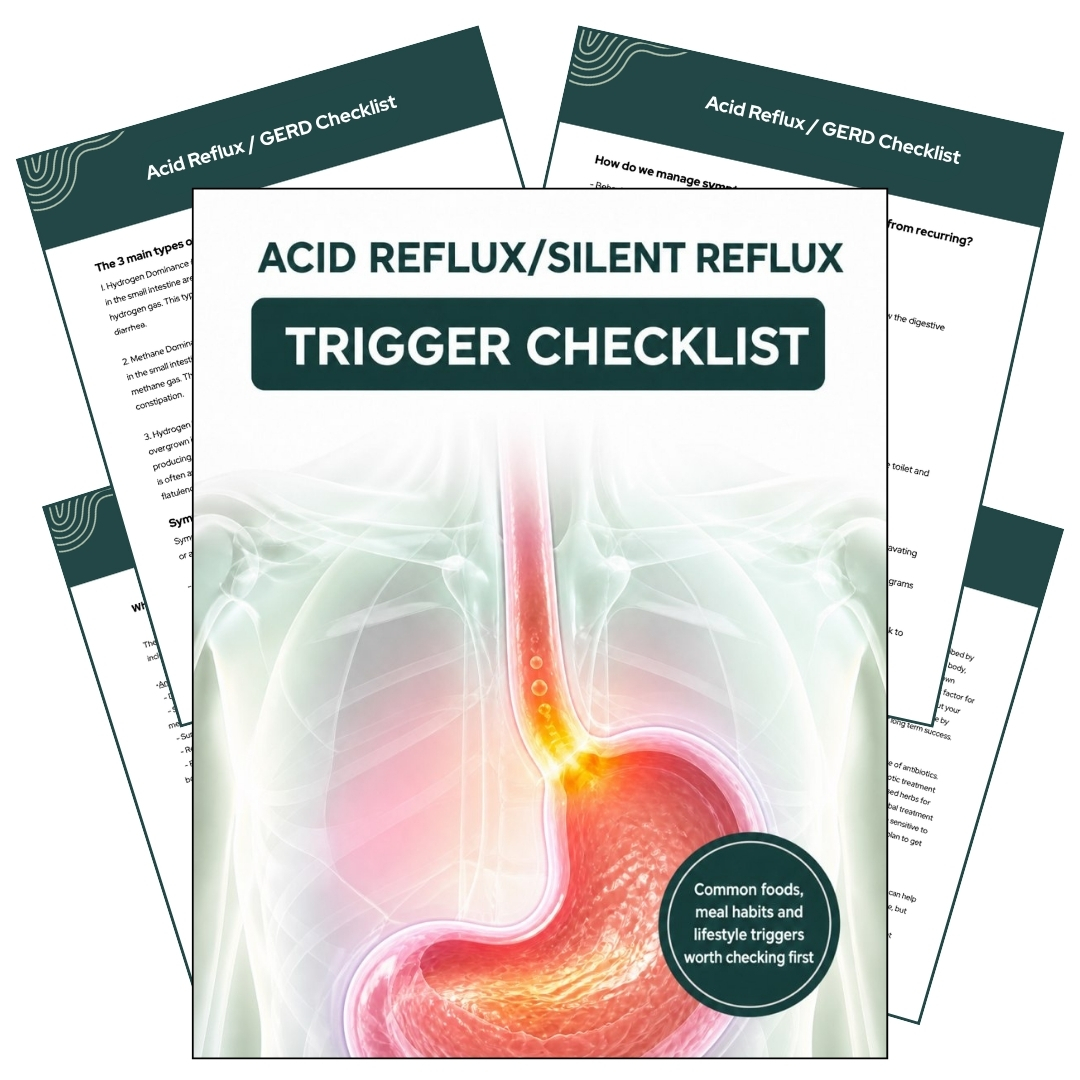
Get the free Acid Reflux/Silent Reflux Trigger Checklist
A one-page checklist of the foods, meal habits and situations most worth reviewing first, whether your symptoms are in the chest or the throat.
Symptoms of silent reflux
LPR symptoms don’t look much like classic acid reflux. The most common ones are:
- Hoarseness or a rough, scratchy voice
- Frequent throat clearing
- Chronic cough with no obvious cause
- Globus sensation, the feeling of a lump or something stuck in the throat
- Excess mucus or post-nasal drip
- A persistent sore or irritated throat
- Difficulty swallowing
The problem is that none of these symptoms are specific to reflux. Allergies, post-nasal drip, voice strain, asthma, infection, thyroid conditions and certain medications can cause exactly the same picture. That overlap makes LPR difficult to diagnose. It’s one reason people can spend years on reflux treatment that isn’t addressing the right problem.
Why LPR is hard to diagnose
No single test reliably confirms LPR. During a laryngoscopy (a visual examination of the throat and voice box), a doctor may see redness or swelling. But these findings are also common in people without reflux. They’re not specific enough to confirm the diagnosis on their own.
pH monitoring, which measures acid levels at the throat or oesophagus, is the most objective test available. But it still isn’t perfect. Some cases of LPR are caused by non-acid reflux: contents containing pepsin (a digestive enzyme from the stomach), gas or weakly acidic material. A standard acid pH test misses these.
This diagnostic uncertainty has real consequences. People can be treated for LPR for months or years on the assumption that reflux is causing their symptoms when another condition is the actual driver. If you’ve been told you have LPR, it’s worth discussing with an ear, nose and throat (ENT) specialist or gastroenterologist whether further testing is appropriate before committing to long-term treatment.
What triggers LPR?
The same factors that promote regular reflux apply here. Reflux reaching the throat comes from the same stomach as reflux stopping in the oesophagus. Large meals, high-fat food, coffee, alcohol, chocolate, mint, spicy food and eating close to bedtime are all worth reviewing.
A few things appear particularly relevant for LPR specifically:
Late eating is one of the more relevant factors. Reflux that happens while you’re horizontal is more likely to travel further up. For someone with LPR, night-time reflux is often the biggest contributor to morning symptoms like hoarseness and throat clearing.
Carbonated drinks increase pressure in the stomach and can push reflux upward. If you drink them regularly, they’re worth cutting for a trial.
Caffeine and alcohol both relax the lower oesophageal sphincter and are worth testing individually.
Pepsin is worth understanding separately. This digestive enzyme travels with refluxed contents and can cause throat irritation even when the material isn’t strongly acidic. It’s one reason acid suppression alone doesn’t always resolve LPR symptoms. The pepsin can still reach the throat even when the pH is controlled.
Why LPR is harder to treat than GERD
That’s worth knowing before spending months on an increasingly restricted diet with no improvement.
Proton pump inhibitors (PPIs) work well for many people with typical GERD. The evidence for LPR is much less convincing. Multiple controlled trials have found that PPIs don’t consistently outperform placebo for throat symptoms attributed to LPR, particularly when those symptoms exist without typical heartburn or regurgitation.
That doesn’t make medication useless. It may help, particularly when typical reflux symptoms are present alongside the throat symptoms. But a poor response to PPIs doesn’t necessarily mean you need a higher dose or more time. It may mean reflux isn’t the primary driver of what you’re experiencing.
Current guidelines from gastroenterology and ENT organisations suggest considering reflux testing before starting long-term acid suppression in people with throat symptoms alone, without typical heartburn or regurgitation.
Get the free Acid Reflux/Silent Reflux Trigger Checklist
A one-page checklist of the foods, meal habits and situations most worth reviewing first, whether your symptoms are in the chest or the throat.
What can actually help
Lifestyle and diet changes
The same principles that help with GERD are the starting point:
- Smaller meals
- Leaving at least three hours between eating and lying down
- Reducing or eliminating alcohol
- Testing individual food triggers one at a time rather than mass elimination
- Stopping smoking if applicable
If symptoms are mainly in the morning or on waking, night-time reflux is the likely culprit. Raising the head of the bed (using risers under the bed frame or a wedge under the mattress, not extra pillows) can reduce how much reflux reaches the throat overnight.
Diaphragmatic breathing
Diaphragmatic breathing has good evidence for GERD and may also benefit LPR. It strengthens the diaphragm, which helps maintain pressure at the lower oesophageal sphincter. The technique takes a few sessions to learn properly. A physiotherapist with experience in this area is worth seeking out.
Speech and language therapy
Chronic throat clearing and coughing can become habitual. Even when the original trigger was reflux, the habit can keep going after the reflux is under control. The throat clearing itself then causes further irritation. A speech-language therapist can help with vocal hygiene, reducing throat-clearing behaviour and voice use patterns that are making things worse. This is particularly relevant for anyone whose voice is affected, or whose main symptom has become a reflex cough or throat-clearing habit.
Looking at other causes
Because LPR symptoms overlap heavily with allergies, post-nasal drip and asthma, it’s worth making sure those conditions have been properly considered. Treating an undiagnosed allergy may do more for a persistent cough than any reflux treatment.
When to get checked urgently
Some symptoms need prompt medical assessment. Don’t manage these with dietary changes:
- Hoarseness lasting more than three to four weeks
- Difficulty or pain with swallowing
- A sensation of food sticking
- Unexplained weight loss
- A lump in the neck
- Coughing up blood
- Any breathing difficulty
The same triggers that cause GERD can cause LPR. One checklist covers both.
Sources and further reading
This article is for education only and does not diagnose, treat or cure reflux. Persistent, severe or changing symptoms should be assessed by an appropriate healthcare professional.